Daytime Habits That Shape Your Night
Good sleep is mostly decided before dinner. Morning light, movement, caffeine timing, naps, and meals all set up the night ahead. A daytime guide to better rest after 50.
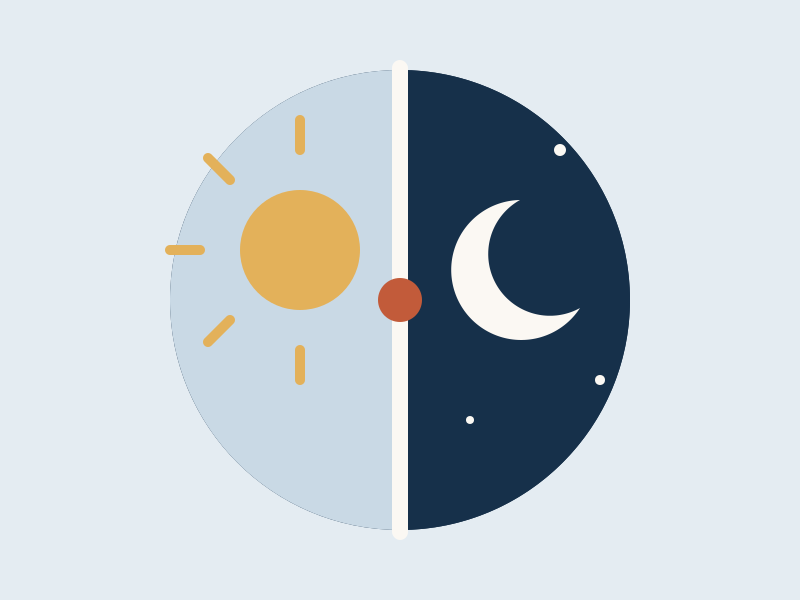
When sleep goes badly, we tend to look for the cause at bedtime. Was it the late show, the second glass of wine, the argument, the thermostat? Sometimes. But sleep researchers have long pointed out that a large share of the night is decided much earlier, in the ordinary choices of the day: when you saw daylight, whether you moved, when you drank your last coffee, and what time you ate.
This guide is the daytime companion to our evening wind-down routine. It works through the day from morning to dinner and explains which habits public health agencies and sleep clinicians most often recommend, and why.
The clock behind the curtain
Every person carries an internal clock, a roughly 24-hour rhythm that governs when the body expects to be alert and when it expects to sleep. The National Institute of General Medical Sciences describes these circadian rhythms as being set primarily by light. When light reaches the eyes in the morning, the clock resets; when light fades in the evening, the body begins preparing for sleep. The National Institute on Aging notes that with age, this rhythm may shift earlier and may become less robust, which is one reason older adults often find themselves sleepy in the early evening and awake before dawn.
The practical implication is that sleep is not a switch you flip at night. It is the end of a cycle that begins when you wake up.
Morning: light and a fixed wake time
The single most useful daytime habit for sleep is a consistent wake time. The CDC, the NIA, and the Mayo Clinic all list keeping a regular schedule as a core recommendation. Waking at the same time each day, including weekends, anchors the clock so that sleepiness arrives at a predictable hour at night.
The second is daylight soon after waking. Outdoor light, even on an overcast day, is far brighter than indoor lighting and tells the clock that the day has begun. Ten to twenty minutes outside in the morning, whether a walk, a coffee on the porch, or simply opening the curtains and sitting by a window, is a small habit with a large effect. For people who wake very early and would like to shift later, morning light should be a little later; for people who struggle to wake, it should come as early as possible.
Midday: movement and the caffeine question
Physical activity is associated with better sleep in a wide range of research, and the Physical Activity Guidelines for Americans list improved sleep among the benefits. The timing is flexible. Morning or afternoon activity is generally recommended; the NIA suggests avoiding vigorous exercise within a few hours of bedtime, since it can be stimulating for some people, though a gentle evening walk is fine and may even help.
Caffeine is the other midday decision. It has a long half-life, and the NIA notes that caffeine late in the day can keep you awake. Sensitivity varies enormously between individuals and tends to increase with age. A cutoff in the early afternoon is a reasonable starting point; if sleep is poor, moving the cutoff earlier, or trying a week without caffeine after noon, is a cheap experiment. Remember that tea, cola, chocolate, and some medications contain caffeine too.
Afternoon: the nap decision
Naps are a subject of strong opinions. The evidence is more relaxed. The NIA suggests avoiding naps in the late afternoon or evening, and many sleep clinicians add that a short nap is less likely to interfere with nighttime sleep than a long one. Long naps and naps taken late in the day can borrow from the night. If you are consistently exhausted enough to need a long nap, that is worth mentioning to a clinician, since it can be a sign of poor nighttime sleep quality rather than simply a preference.
Evening meals and alcohol
Large meals close to bedtime can make lying down uncomfortable and are among the things the NIA suggests avoiding. Eating dinner at a consistent time, a few hours before bed, gives digestion a chance to settle. If you are hungry later, a small snack is fine.
Alcohol deserves its usual note. It may make falling asleep faster, but the NIA points out that it tends to fragment sleep later in the night and can worsen snoring and breathing problems. If sleep is a priority, an earlier and smaller drink, or none, is the direction to try.
Indoor light through the day
Many adults over 50 spend the day in dim indoor light and the evening in bright light, which is the opposite of what the clock wants. Working near a window, taking breaks outside, and using brighter lighting during the day all help sharpen the contrast between day and night. In the evening, dimmer and warmer light does the opposite job. The two halves of the day support each other.
Regularity across the week
The weekend lie-in is tempting and, for people with sleep trouble, often counterproductive. Sleeping in by two hours on Saturday and Sunday shifts the clock enough that Monday morning feels like a small case of jet lag. The CDC's guidance emphasizes consistency across all days. If you need extra sleep on a weekend, an earlier bedtime does the job with less disruption than a later wake time.
Medications and conditions to consider
Some medications affect sleep, including certain decongestants, some blood pressure drugs, and some antidepressants, and their timing may matter. If your sleep changed around the time a prescription changed, a pharmacist can help you spot the connection. Conditions such as sleep apnea, restless legs, chronic pain, and nighttime urination also fragment sleep and are not solved by daytime habits alone. Persistent trouble, despite a careful routine, is a reason to raise the subject at your next visit.
A daytime checklist
- Wake at the same time every day.
- Get outdoor light within an hour of waking.
- Move most days, earlier rather than later.
- Set a caffeine cutoff in the early afternoon.
- If you nap, keep it short and early.
- Eat dinner a few hours before bed.
- Keep the day bright and the evening dim.
- Hold the schedule on weekends.
The day decides the night
None of these habits is difficult. What makes them powerful is that they work together and accumulate. A consistent wake time makes morning light easier; morning light makes daytime energy better; better energy makes movement easier; movement makes the evening wind-down more natural; and the wind-down makes the next morning's wake time easier to keep. Sleep after 50 is not a problem to be solved in bed. It is a rhythm to be kept, and the day is where you keep it.
Sources
We cite public health agencies, academic medical centers, and government institutions. Links open the source directly.
- National Institute on Aging. A Good Night's Sleep
- National Institute of General Medical Sciences. Circadian Rhythms
- Centers for Disease Control and Prevention. About Sleep
- Mayo Clinic. Sleep tips: 6 steps to better sleep
- U.S. Department of Health and Human Services. Physical Activity Guidelines for Americans, 2nd edition
This article is for general educational purposes and is not medical advice. It does not replace consultation with a qualified health professional. Please read our Health Disclaimer and Editorial Policy.