Hydration After 60: Why Thirst Is Not Always a Reliable Guide
The sense of thirst tends to weaken with age, which makes staying hydrated a matter of habit rather than instinct. What to drink, how much, and the signs worth noticing.
Water is so ordinary that it is easy to forget it is a nutrient. Every cell depends on it. It carries nutrients, regulates temperature, cushions joints, and helps the kidneys clear waste. And yet, for adults in their sixties and beyond, getting enough of it becomes slightly harder each year, for a reason that has nothing to do with willpower: the body's thirst signal fades.
This guide looks at why that happens, how much fluid is reasonable, what counts, and what signs suggest that the balance has tipped the wrong way. It is meant for everyday life, not for athletes or for people managing conditions that require specific fluid targets.
Why thirst weakens with age
The National Institute on Aging notes that older adults may not feel thirsty even when their bodies need fluid. The mechanisms are still being studied, but the practical consequence is clear: by the time an older person feels thirsty, they may already be somewhat behind. Add in a smaller total body water content, which naturally declines with age, and a smaller margin before the effects show up.
Other factors compound this. Some common medications, including certain diuretics and blood pressure drugs, increase fluid loss. Mobility problems can make getting a drink more of a project. And some people deliberately drink less to reduce bathroom trips, especially at night, trading one problem for another.
How much is enough
You may have heard the rule of eight glasses a day. The Mayo Clinic describes that as a reasonable goal for many people but notes that needs vary with activity, climate, health, and body size, and that the National Academies of Sciences, Engineering, and Medicine have described adequate daily fluid intake in terms that include all beverages and food, not just plain water. In practice, most healthy adults do well by drinking regularly through the day and letting the color of their urine be the guide: pale yellow generally means you are well hydrated, while dark yellow or amber suggests you need more.
Because the thirst signal is less reliable after 60, a schedule works better than instinct. A glass on waking, one with each meal, one mid-morning, one mid-afternoon, and one in the early evening adds up to a sensible baseline without any counting. Adjust upward in hot weather, during illness, or on active days.
What counts
Water is the simplest and least expensive option, but it is not the only one. The Mayo Clinic notes that beverages such as milk, juice, and herbal teas are composed mostly of water, and that even caffeinated drinks contribute to daily intake. Soups and broths count. So do water-rich foods: melon, oranges, berries, cucumbers, tomatoes, lettuce, and yogurt all deliver a meaningful amount of fluid. MedlinePlus, the National Library of Medicine's consumer health service, makes the same point in its guidance on dehydration.
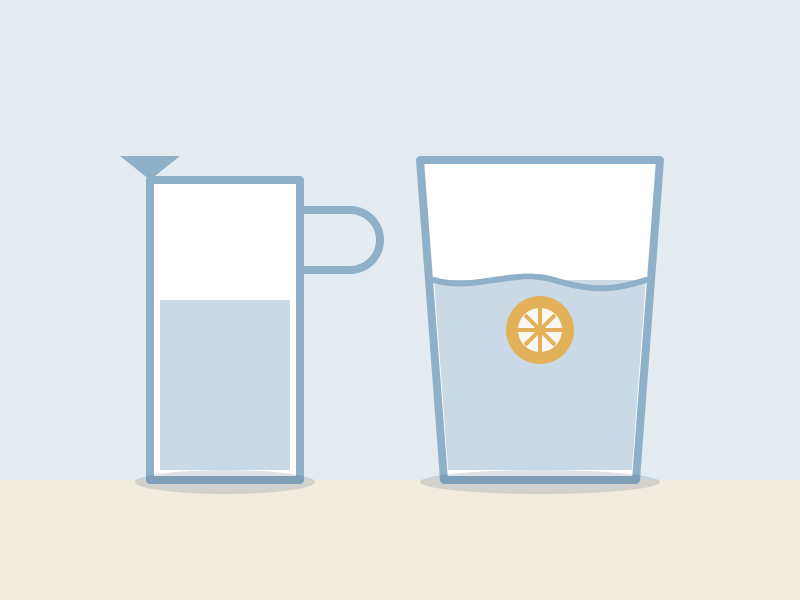
A few things to keep in mind. Sugary drinks add calories without much benefit. Alcohol increases fluid loss and is best counted as a subtraction rather than an addition. If you find plain water dull, a slice of lemon, cucumber, or a few crushed mint leaves changes it enough to make it more appealing, and sparkling water is as hydrating as still.
Signs that you are behind
MedlinePlus lists common signs of dehydration in adults: thirst, less frequent urination, dark-colored urine, fatigue, dizziness, and confusion. In older adults, the NIA adds that confusion and dizziness can be early and easily mistaken for other problems. Dry mouth, headache, and muscle cramps are also common.
The practical point is that these symptoms often arrive before the person feels particularly thirsty. If you notice several of them, especially in hot weather or during illness, drinking fluids steadily over the next few hours is the first response. Severe symptoms such as fainting, rapid heartbeat, or confusion that does not clear call for medical attention.
Hot weather, illness, and other high-risk times
The CDC's guidance on extreme heat identifies older adults as being at higher risk of heat-related illness, partly because the body adjusts less quickly to temperature changes and partly because of the same thirst issue. During heat waves, drinking more than usual, staying in cool spaces during the hottest hours, and checking on neighbors who live alone are all reasonable precautions.
Illness raises needs too. Fever, vomiting, and diarrhea all increase fluid loss, and appetite for both food and drink often falls at exactly the moment more fluid is needed. Small sips frequently, broths, and diluted juices are easier to manage than large glasses. If someone cannot keep fluids down for a day, that is a reason to call a clinician.
The nighttime trade-off
Many older adults cut back on fluids in the evening to reduce trips to the bathroom. This is understandable, and shifting intake earlier in the day is a sensible compromise: front-load fluids in the morning and afternoon, and taper after dinner rather than stopping abruptly. If nighttime urination is frequent enough to be disruptive, it is worth raising with a clinician, since it can have causes that go beyond how much you drink.
When fluid limits apply
Not everyone should drink more. People with heart failure, advanced kidney disease, and some other conditions may be advised to limit fluids, and those instructions take precedence over any general guidance. If you are on a fluid restriction, or if you take medications that affect the kidneys or fluid balance, ask your care team what your daily target should be and how to recognize both too little and too much.
Small systems that work
Because hydration after 60 is a habit rather than an instinct, the useful tools are the ones that remove friction. Keep a filled glass or bottle where you spend most of your time. Use a bottle with markings so you can see progress without counting. Pair drinking with fixed events: every meal, every medication, every time you sit down to read. Keep a pitcher in the refrigerator so that cold water is always ready. If you care for an older relative, offer a drink rather than asking whether they want one; the question often gets a reflexive no.
A quiet foundation
Hydration is not a dramatic health topic. There is no program to follow and no special equipment involved. But for adults past 60 it is one of the foundations that other things rest on: energy, clear thinking, steady balance, comfortable digestion, and a body that copes with heat and illness. A glass at each meal and a few in between, day after day, is the whole method.
Sources
We cite public health agencies, academic medical centers, and government institutions. Links open the source directly.
- National Institute on Aging. Healthy Eating, Nutrition, and Diet
- Mayo Clinic. Water: How much should you drink every day?
- MedlinePlus, National Library of Medicine. Dehydration
- Centers for Disease Control and Prevention. Heat and Older Adults
This article is for general educational purposes and is not medical advice. It does not replace consultation with a qualified health professional. Please read our Health Disclaimer and Editorial Policy.